| Charge
Controller, Inverter and Grid-Tie Inverter Charge
controllers receive
Direct Current (DC) from the solar panels and/or wind generator,
then stores the electricity in the
batteries in DC form; the stored energy provides power to appliances and electronics in Direct
Current, as well as Alternating Current form. If the appliance or electronic equipment operates with Alternating
Current, then you need an inverter to convert the Direct Current to
Alternating Current. |
 |
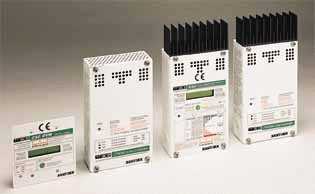
Charge Controllers
| Charge
controllers provide four basic functions: (1) channel the electrical
charge from the photovoltaic array to the battery; (2) protect the
battery from overcharging; (3)protect the battery from
discharging; (4) provide electricity from battery to load.
Some dealer and retail outfits sell customers chargers that do not
protect the battery from discharging. Solartech technologies
DOES NOT sell chargers that don't protect the battery.
Purchasing solar equipment is an investment. Common sense
dictates that an investment should be protected.
|
 |
Inverters
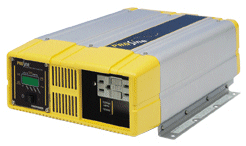
| Inverters are
typically used with appliances or electronics that require Alternate
Voltages (120VAC or 240VAC) to operate. Inverters are
typically 90% efficient if used at the same capacity. In other
words, if the appliances that are operating off the inverter are
consuming at lease 90% of the inverter's capacity, the
inverter is operating at 90% capacity. On the other hand, if
the appliances are only operating at 50% then the inverters capacity
drops sharply. That means, the inverter will consume more
power to produce less power. Therefore, when using an
inverter, you need to size it for the load, even if it means
purchasing additional inverters for each appliance. |
 |
Grid-Tie Inverters
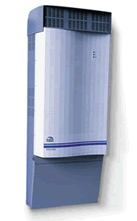
| Grid-Tie
inverters operate in the same manner as regular inverters. The
main difference between them is that the grid-tie inverter interacts
with the public utility grid. The typical grid-tie inverter
does not operate if there is a power failure. Grid-Tie
inverters operate under the same principle as a power plant
generator: the only way a power generator can put out power is
if it has comparable input power. In other words, the grid-tie
generator replicates the signal provided by the public utility grid,
therefore if the public grid goes down, so does the Grid-tie
inverter. There are some inverters that have a battery backup
option to prevent total shutdown in the event of a blackout or
brownout. |
 |
|
|

